Filming a live orchestral performance requires more than technical skill and good camera work. To capture the right musician at the right moment, the production team must understand what is happening within the music—and what is about to happen next.
At Three Choirs Festival, this responsibility belongs to the music director.
Working from the full musical score, the music director guides the vision director through each performance. They identify important solos, choir entries, changes in instrumentation and significant musical moments, giving the production team the advance warning needed to prepare the appropriate camera shots.
It is a specialist role that combines musical knowledge, careful preparation and clear communication.
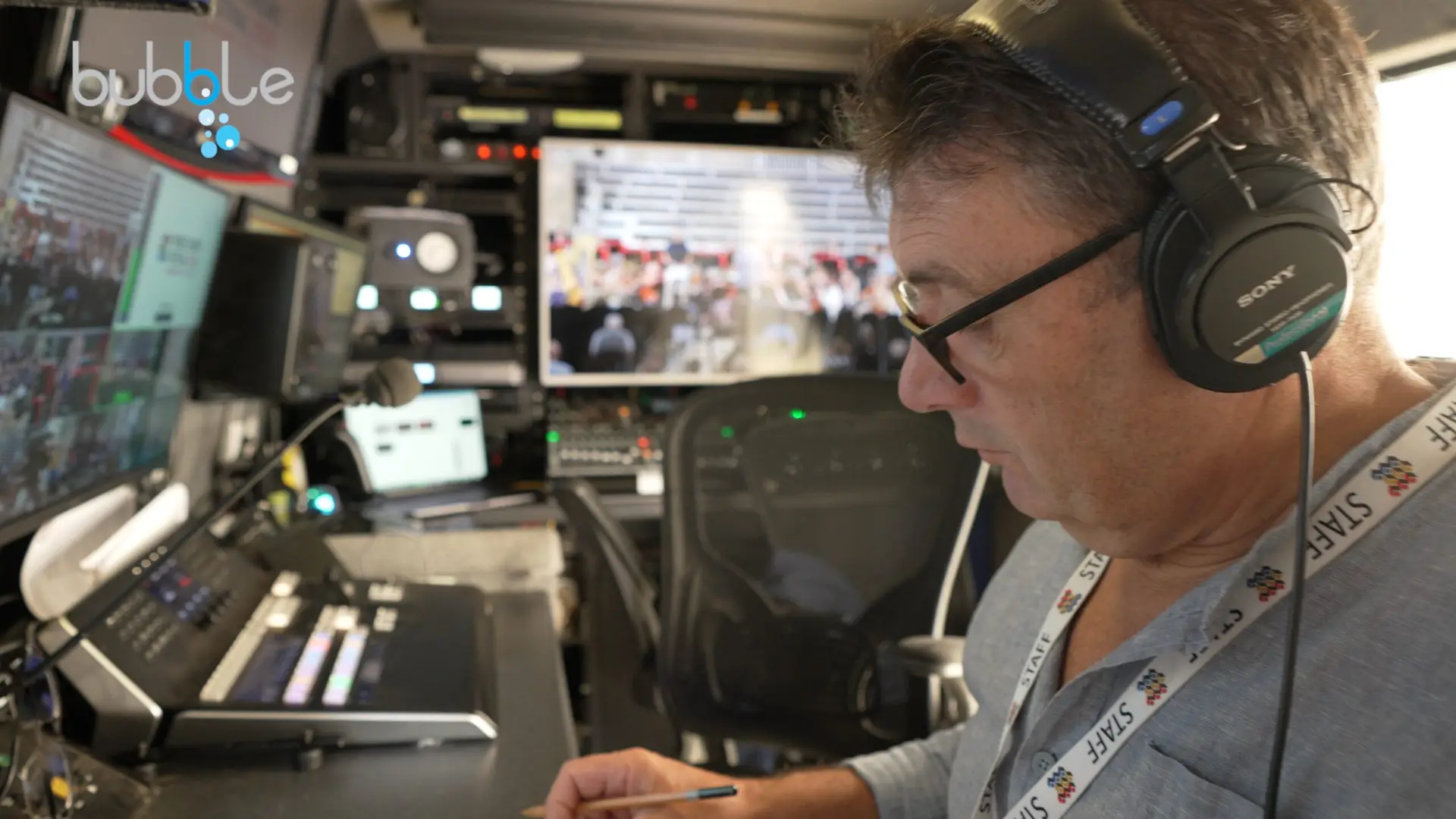
Meet the Team: Music Director, David Evans
In this type of production, the music director acts as the link between the musical score and the live television coverage.
The vision director is responsible for choosing the pictures that appear on the screens around the cathedral. However, with a large orchestra, choir, conductor and soloists all involved, it is impossible to anticipate every important moment by watching the stage alone.
The music director follows the score throughout the concert and advises the vision director about what is coming next.
This might include a violin solo, an important woodwind passage, the entrance of a choir section or a change in focus between the orchestra and conductor. The information allows the vision director to instruct the relevant camera operator and prepare the shot before the musical moment begins.
Without this advance guidance, a short solo or instrumental entry could easily be missed.
Preparing the Musical Score
The music director’s work begins well before the performance.
Each score must be studied and carefully marked with the moments that will be most useful to the visual production. These markings may identify individual instruments, soloists, choir entries, conductor cues and changes in the structure or pace of the music.
The music director must decide which moments are visually important as well as musically significant.
Not every change in the score needs to result in a camera cut. The purpose is to help the pictures complement the music rather than create unnecessary movement on screen.
This preparation gives the production a clear visual roadmap while still allowing the team to respond naturally to the live performance.
Reading the Score in Real Time
During the concert, the music director follows the printed score bar by bar.
This requires complete concentration. A large orchestral score may contain separate lines for every section of the orchestra, the choir and any featured soloists. The director must keep their place while listening closely to the performance and anticipating the next marked cue.
The timing must be precise.
If an instrumental solo begins in ten seconds, the vision director needs enough warning to contact the appropriate camera operator, locate the musician and prepare a well-composed shot.
The camera cannot simply move to the correct position at the moment the solo starts. By then, part of the musical phrase may already have passed.
The music director therefore needs to remain several steps ahead.
Guiding the Vision Director
Throughout the performance, the music director communicates directly with the vision director.
The instructions are usually short and specific. They may identify an approaching solo, a particular section of the choir or an important moment involving the conductor.
The vision director then translates this musical information into camera instructions.
For example, the music director may indicate that the oboe is about to become prominent. The vision director can then ask one camera operator to prepare a close-up of the oboist while keeping another suitable shot available on screen.
Once the new shot is correctly framed and ready, the vision director can select it at the appropriate point in the music.
This close working relationship allows the production to follow the performance with accuracy and confidence.
From Musical Cue to Live Picture
Every picture shown on screen is the result of several people working together.
The music director identifies the upcoming musical moment. The vision director decides how it should be covered and assigns a camera. The camera operator finds and frames the subject, while the vision engineer checks that the picture is correctly exposed and matched with the other cameras.
The vision director then decides exactly when to use the shot.
This entire process may happen within a matter of seconds.
When it works well, the audience sees a natural visual interpretation of the music: the featured instrument appears as its solo begins, the conductor is shown at an important cue, or the picture widens as the full orchestra and choir come together.
The technical process remains invisible, allowing the audience to concentrate on the performance.
Understanding the Shape of the Music
The music director does more than identify individual instruments.
They also help the vision director understand the overall structure and character of the performance. The score reveals how the music builds, where it becomes quieter, when themes return and how different sections interact.
This information helps shape the pace of the camera coverage.
A dramatic and energetic passage may suit a sequence of shorter shots, moving between the conductor, orchestra and choir. A slower or more reflective section may be better served by longer, steadier images.
The music director can also indicate when an important musical transition is approaching, allowing the vision director to prepare a wider shot or change the visual emphasis.
The result is camera direction that follows the emotion and rhythm of the performance rather than simply showing a series of technically correct pictures.
Working With a Large Orchestra and Choir
A major choral concert may involve hundreds of performers.
From the production position, it is not always easy to identify individual musicians or see which section is creating a particular sound. Some instruments may also be partially obscured by other performers, music stands or the layout of the stage.
The marked score provides the information needed to navigate this complex visual environment.
The music director can identify exactly which instrument or voice is about to become important. The vision director can then choose the camera with the clearest view or ask a PTZ robotic camera operator to prepare an alternative angle.
Careful planning is particularly important when a solo lasts only a few bars. Every member of the production team must be ready before it begins.
Responding to a Live Performance
Although the score provides a detailed guide, every live performance is slightly different.
Conductors may choose a different tempo, soloists may hold a note for longer, and pauses between movements may vary. The music director must follow the performance itself rather than relying only on the expected timing.
They listen for musical landmarks and watch the conductor to ensure the production remains aligned with what is happening on stage.
If the orchestra moves through a passage faster than anticipated, the music director must adjust immediately. Instructions to the vision director need to remain accurate, concise and early enough to be useful.
This ability to combine score reading with active listening is a key part of the role.
Supporting the Audience Experience
At Three Choirs Festival, the live pictures are relayed to screens positioned throughout the cathedral.
These screens help audience members in restricted-view seats see the conductor, soloists, choir and individual orchestral players. They also allow everyone in the venue to appreciate details that may be difficult to see from a distance.
The music director helps ensure that the pictures show the most relevant part of the performance at the right time.
When a soloist begins, the audience can see them. When the conductor brings in a new section, the screens can reveal that moment. When the full orchestra and choir reach a musical climax, the visual coverage can reflect its scale.
The aim is not to turn the concert into a television programme that competes with the live experience. It is to use the cameras to help the audience engage more closely with the music.
A Specialist Role Within the Production Team
The music director’s work often takes place away from the cameras and outside the audience’s view, but it influences almost every shot selected during the concert.
The role requires detailed musical knowledge, the ability to read complex orchestral scores and an understanding of how music can be translated into pictures.
It also requires calm and precise communication. Instructions must be delivered clearly without distracting the vision director from the many other elements of the live production.
Together, the music director and vision director create a visual interpretation of the performance in real time.
Completing Our Behind-the-Scenes Series
This film completes our behind-the-scenes series from Three Choirs Festival, looking at the different people and skills involved in delivering the live production.
We have followed the work of the camera operator, the vision director, and the vision engineer and PTZ robotic camera operator. In this final film, we explore the role of the music director and the specialist knowledge required to guide the cameras through a live orchestral score.
Our thanks go to Jon Essex for creating the films and helping us share the work of the production team.
Professional Multi-Camera Filming for Orchestral Performances
Bubble Production provides experienced music directors, vision directors, camera crews and complete multi-camera production facilities for orchestral concerts, choirs, festivals and live music events.
Our teams have extensive experience filming performances in cathedrals, concert halls, historic buildings and outdoor venues. We can provide live relay to venue screens, professional recording, live streaming and outside broadcast facilities.
By combining musical knowledge with experienced camera direction and broadcast technology, we create coverage that follows the score, captures important moments and supports the live audience experience.
To discuss live orchestral filming, multi-camera concert production or venue screen coverage for your next event, contact Bubble Production.
Take a look at the other profile films following our work at Three Choirs Festival here: https://bubbleproduction.co.uk/live-streaming-insights/