A successful live production depends on every camera producing clear, consistent and reliable pictures. While camera operators and the vision director concentrate on capturing the performance, the vision engineer works behind the scenes to ensure the technical quality of those images remains consistent throughout the concert.
At Three Choirs Festival, the role also includes operating the PTZ robotic cameras positioned around the cathedral.
This combination of technical engineering and remote camera operation requires concentration, precision and a detailed understanding of live multi-camera production.
Meet the Team: Vision Engineer, George Tarplee
The vision engineer is responsible for maintaining the technical quality of every camera used in the production.
Different camera positions can produce noticeably different pictures. One camera may be facing a brightly lit soloist, while another is looking across a darker area of the choir or orchestra. Light levels may also change as performers move or as the natural light inside the cathedral alters during the day.
The vision engineer monitors every camera and makes continuous adjustments to ensure the pictures match as closely as possible.
This includes managing exposure, colour balance, contrast, black levels and other camera settings. The aim is to create a consistent visual appearance so that the audience is not distracted by sudden changes when the vision director cuts from one camera to another.
Matching Multiple Cameras
Multi-camera productions often use a mixture of camera types.
At Three Choirs Festival, the system includes operated broadcast cameras, PTZ robotic cameras and small fixed cameras positioned within the orchestra. Each type of camera has different characteristics, lenses and operating positions.
The vision engineer must bring these different sources together and make them look like part of the same production.
This process is often known as camera matching or camera shading. It involves making careful adjustments throughout the performance rather than setting the cameras once and leaving them unchanged.
A musician dressed in white may enter a bright pool of light. A camera may move from a darker part of the cathedral to the main stage. A close-up may expose differences that were not noticeable in a wide shot.
The vision engineer must anticipate and correct these changes in real time.
Working With the Vision Director
The vision engineer works closely with the vision director throughout the concert.
While the director concentrates on selecting shots and following the musical score, the engineer ensures each available picture is technically ready to be used.
Communication between the two roles is essential. The vision director may warn the engineer that a particular camera is about to be selected, allowing any final adjustments to be made before it appears on screen.
The vision engineer must also keep track of cameras that are moving, reframing or preparing for a new shot. A technically poor image can limit the director’s options, so every camera needs to remain ready whenever possible.
Operating PTZ Robotic Cameras
PTZ stands for pan, tilt and zoom. A PTZ camera can be moved and controlled remotely rather than requiring a camera operator to stand beside it.
At Three Choirs Festival, PTZ cameras are mounted high on the cathedral pillars. These elevated positions provide clear views across the choir, orchestra and performance area without taking up valuable floor space or blocking the audience’s view.
The PTZ operator controls these cameras from the production area using a remote control panel.
The operator can move the camera horizontally, tilt it vertically, adjust the zoom and recall previously prepared camera positions. This makes it possible to capture a wide range of shots from locations that would be difficult or impractical for a conventional camera operator.
More Than Pressing a Preset
PTZ cameras can store preset positions, but successful robotic camera operation involves far more than simply pressing a button.
Each preset needs to be prepared carefully. The framing must take account of the musician’s position, the instrument being played and the surrounding performers. The operator also needs to consider whether someone may move into the shot or obscure the subject.
During the performance, presets may need to be adjusted. Musicians do not always sit or stand in exactly the same position, and soloists may move unexpectedly.
The PTZ operator must therefore monitor the live camera feeds and make small corrections when necessary.
Movements also need to be smooth and controlled. Sudden pans, fast zooms or poorly timed repositioning can be distracting and may make a camera temporarily unusable.
Following the Performance Remotely
Like the camera operators and vision director, the PTZ operator must understand what is happening musically.
The operator may be asked to find a particular section of the orchestra, prepare a close-up of the choir or move to a shot of the conductor. These instructions often need to be completed before the vision director is ready to use the camera.
A musical moment may last only a few seconds.
The operator must locate the subject, adjust the composition and confirm that the shot is stable and correctly exposed. At the same time, the vision engineer must ensure the image matches the other cameras.
This makes the combined role particularly demanding. It requires both creative camera awareness and technical attention to picture quality.
Using Cameras Discreetly in a Cathedral
Historic venues require a sensitive approach to camera placement.
Large camera platforms and operators cannot be positioned everywhere without affecting audience sightlines or the appearance of the venue. PTZ cameras provide an effective way to obtain additional angles while keeping the production footprint relatively small.
Mounted high on the pillars, the cameras can remain discreet while offering useful views of the performers and conductor.
The operator can control several robotic cameras from one position, allowing the production to cover more of the performance without placing additional crew around the cathedral.
This is particularly useful for live screen relay, where audiences in restricted-view seats need reliable close-ups and alternative views of the stage.
Maintaining Consistency Throughout the Concert
A concert can last for several hours, and concentration must remain high from beginning to end.
The vision engineer continually checks each camera for changes in exposure, colour and focus. The PTZ operator must also ensure that robotic camera positions remain accurate and useful as the performance develops.
Small technical differences can become very noticeable on large screens.
A camera that is slightly too bright, too dark or different in colour can disrupt the visual flow of the production. Careful engineering helps make every cut feel seamless.
The goal is for the audience to concentrate on the performance rather than the technology used to capture it.
Responding to Technical Challenges
Live production always brings the possibility of unexpected problems.
A camera may lose its intended position, a performer may move out of frame or changing light levels may alter the appearance of a shot. The vision engineer and PTZ operator must respond quickly without interrupting the programme.
There is rarely time for lengthy troubleshooting during a live concert.
The operator needs to identify the issue, make the necessary adjustment and return the camera to the director as quickly as possible. Having backup shots and alternative camera positions helps the team maintain continuous coverage.
Experience, preparation and calm decision-making are essential.
The Team Behind the Pictures
As part of our behind-the-scenes series from Three Choirs Festival, we are profiling the people responsible for delivering the live production.
In this film, we look at the combined role of the vision engineer and PTZ robotic camera operator.
It is a role that brings together camera engineering, remote operation and close teamwork with the vision director and camera crew. Although much of the work takes place away from the audience, it has a major impact on the quality of every picture shown around the cathedral.
Our thanks go to Jon Essex for creating the films in this series and helping us share the work of the production team.
Professional Vision Engineering and PTZ Camera Operation
Bubble Production provides experienced vision engineers, PTZ camera operators and complete multi-camera production facilities for concerts, festivals, conferences, sporting events and live broadcasts.
Our systems can combine operated cameras, robotic cameras and fixed camera positions, with live pictures delivered to venue screens, online audiences or recorded for future use.
From matching camera pictures and managing exposure to remotely framing musicians and soloists, our team handles the technical detail needed to produce a consistent and professional programme.
To discuss PTZ camera operation, vision engineering or multi-camera filming for your next event, contact Bubble Production.
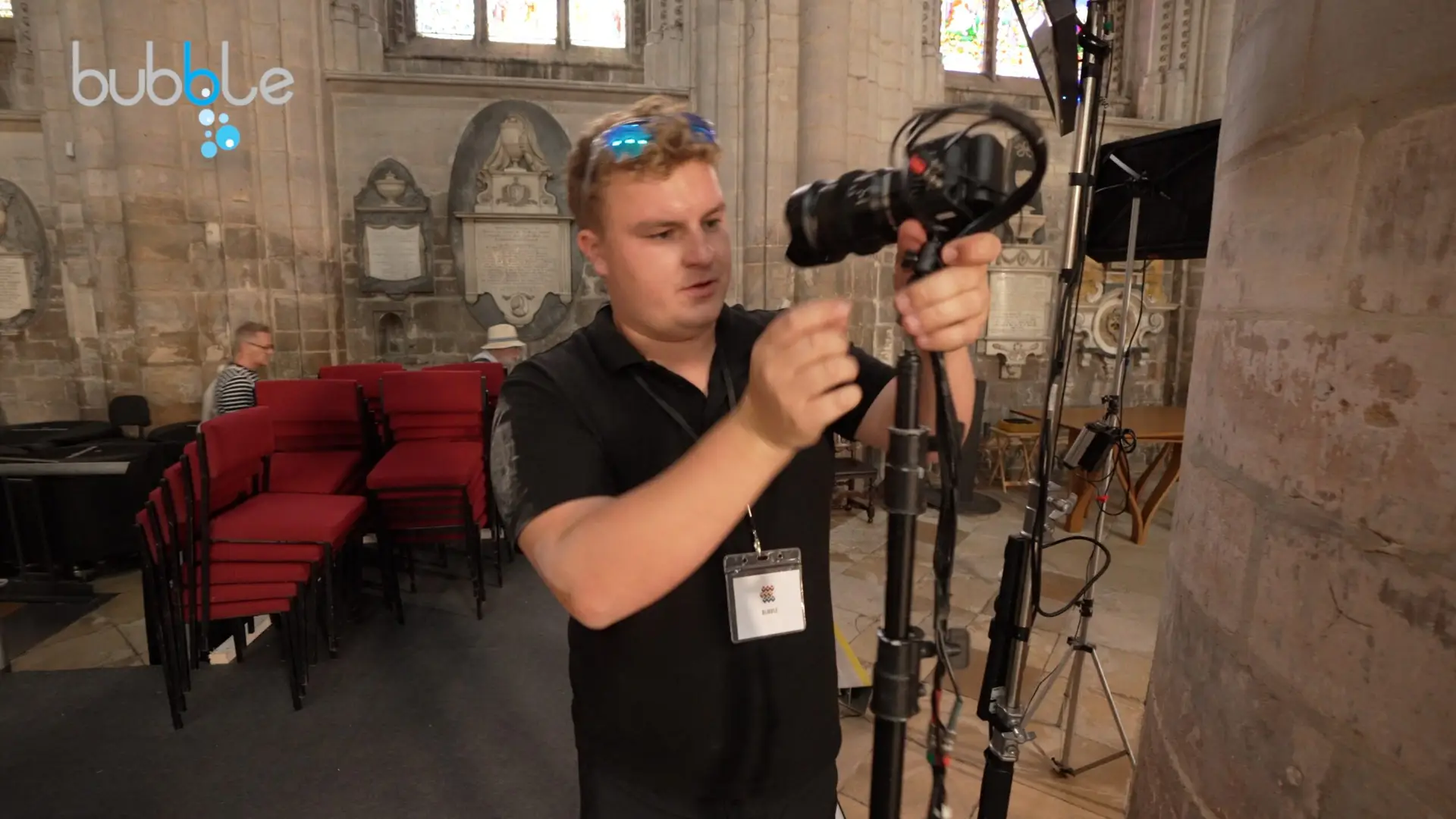
Take a look at the other profile films following our work at Three Choirs Festival here: https://bubbleproduction.co.uk/live-streaming-insights/