

Filming a live orchestral performance is very different from filming a conventional event. There are no second takes, no pauses and no opportunities to repeat a moment if it is missed. Every camera operator must understand the performance, anticipate what is about to happen and respond quickly without distracting the audience or performers.
At this year’s Three Choirs Festival, Bubble Production is once again providing the live camera coverage that brings the performances to screens throughout the cathedral. The production allows audience members in seats with restricted views to follow the concert in real time, while preserving the atmosphere of the live performance.
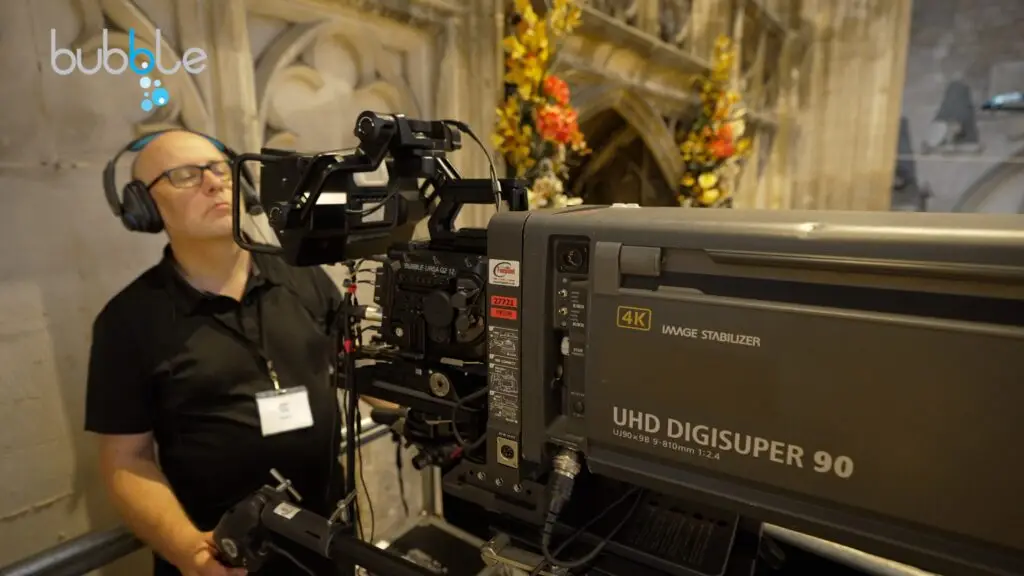
Meet the Team: Camera Operator, Jon Essex
As part of our behind-the-scenes series from Three Choirs Festival, we are taking a closer look at the people responsible for delivering the live production.
In this first film, we focus on the role of the camera operator.
Our thanks go to Jon Essex, who has worked as part of the Bubble Production camera team while also creating this series of behind-the-scenes films.
His work offers a valuable insight into the concentration, teamwork and technical awareness required to film live orchestral performances successfully.
The Role of a Camera Operator
A camera operator’s job is not simply to point a camera at the stage. During an orchestral concert, the operator must constantly listen, watch and anticipate.
A musical cue may last only a few seconds. A soloist may rise, a conductor may signal a new section or a particular instrument may become the focus of the performance. The camera operator needs to recognise these moments and frame the shot before the vision and music director call for it.
This requires concentration, technical skill and a strong understanding of live production.
The operator must also maintain smooth, stable and carefully composed images. Camera movements need to feel natural and unobtrusive. Sudden zooms, unnecessary movement or poorly timed reframing can be distracting, particularly during quieter sections of a performance.
Working as Part of a Live Production Team
Live orchestral filming is a team effort.
The camera operators work closely with the vision director, who takes a cue from the music director and selects the shots that appear on the screens around the venue. The director follows a marked musical score and uses it to anticipate solos, instrumental changes and important visual moments.
Clear communication between the director and camera operators is essential. Operators receive instructions through their headsets, but they must also use their own judgement to prepare useful shots and react to anything unexpected.
A good camera operator is always thinking ahead. This gives the director a range of strong options and helps the production flow naturally with the music.
Filming Inside a Cathedral
Working inside a historic cathedral brings its own challenges.
Camera positions must be carefully chosen to provide useful angles without blocking sightlines or interfering with the performance. Equipment needs to be installed discreetly, and operators must remain sensitive to the surroundings throughout the concert.
Lighting levels can also vary considerably. Bright stage areas may sit alongside darker parts of the building, so camera settings must be managed carefully to maintain consistent and natural-looking images.
The scale of the venue is another consideration. Long camera angles, architectural features and audience positions all influence the way each shot is framed.
At Three Choirs Festival, the camera team works alongside remotely operated cameras and small fixed cameras positioned around the orchestra. Together, these provide a wide range of views, from broad shots of the full performance area to close-ups of musicians, soloists and the conductor.
Capturing the Performance Without Distracting From It
The aim of live orchestral filming is not to overwhelm the performance with unnecessary camera movement or constant cutting. The pictures should support the music.
A wide shot can show the scale of the orchestra and choir. A close-up can reveal the concentration of a soloist or the precision of the conductor. A carefully timed shot of a particular instrument can help the audience understand where an important musical line is coming from.
The most effective camera work often feels effortless. The audience should be able to follow the performance naturally without becoming overly aware of the production behind it.
That balance takes experience.
Professional Multi-Camera Production for Live Music
Bubble Production provides professional multi-camera filming, live relay and broadcast production for concerts, festivals and live events across the UK.
Our teams have extensive experience filming orchestras, choirs and live performances in cathedrals, concert halls and outdoor venues. We provide camera crews, portable production units, outside broadcast facilities, live streaming and on-site screen coverage.
Whether the production is being streamed online, recorded for future use or relayed to screens around a venue, our goal is always the same: to capture the performance clearly, creatively and without compromising the live experience.
To discuss filming, streaming or live screen coverage for your event, contact the Bubble Production team.
Take a look at the other profile films following our work at Three Choirs Festival here: https://bubbleproduction.co.uk/live-streaming-insights/


